1998balise
balise (n.): a marker used to signal danger
baliser (colloquial verb): to be afraid
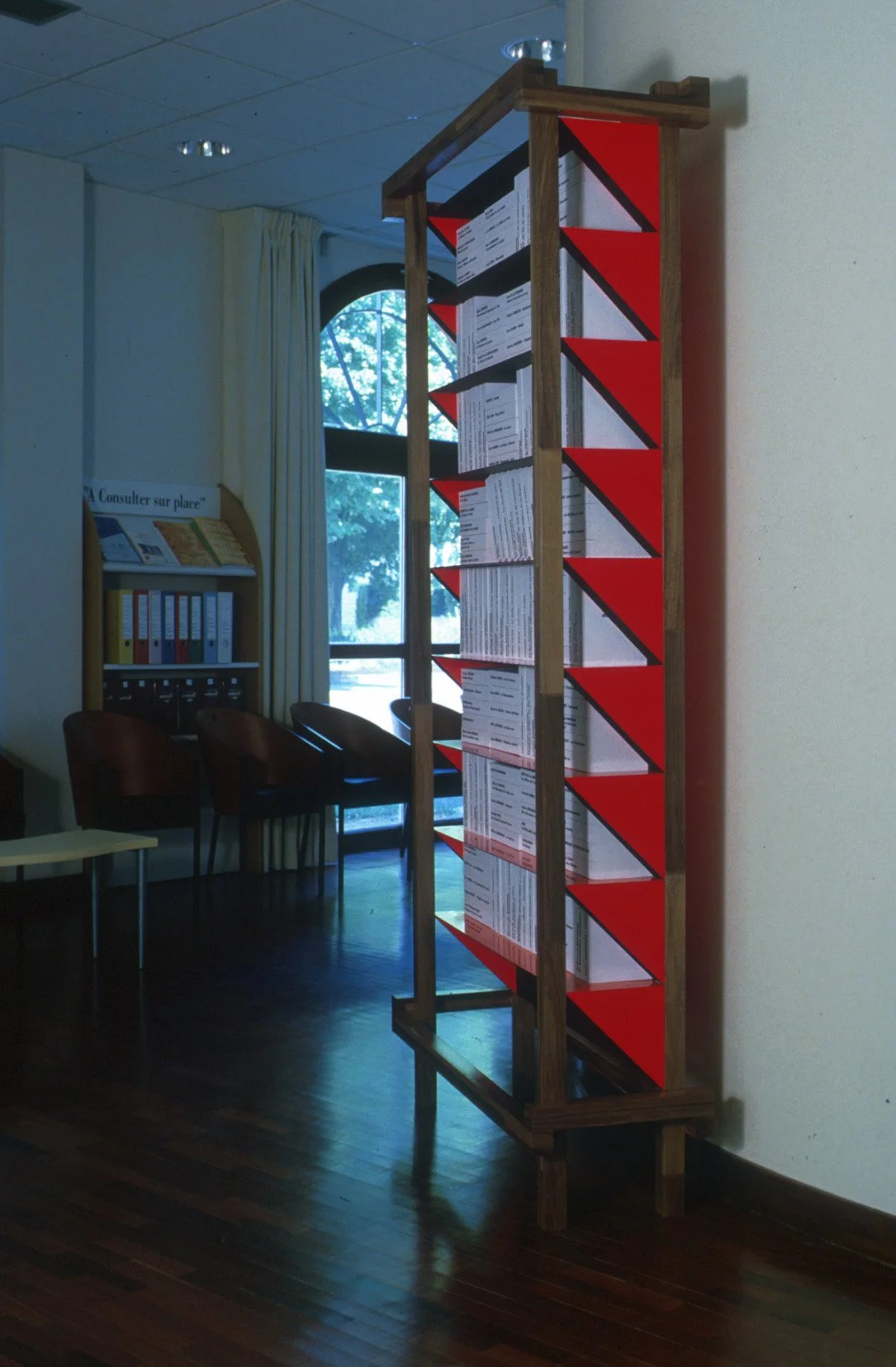
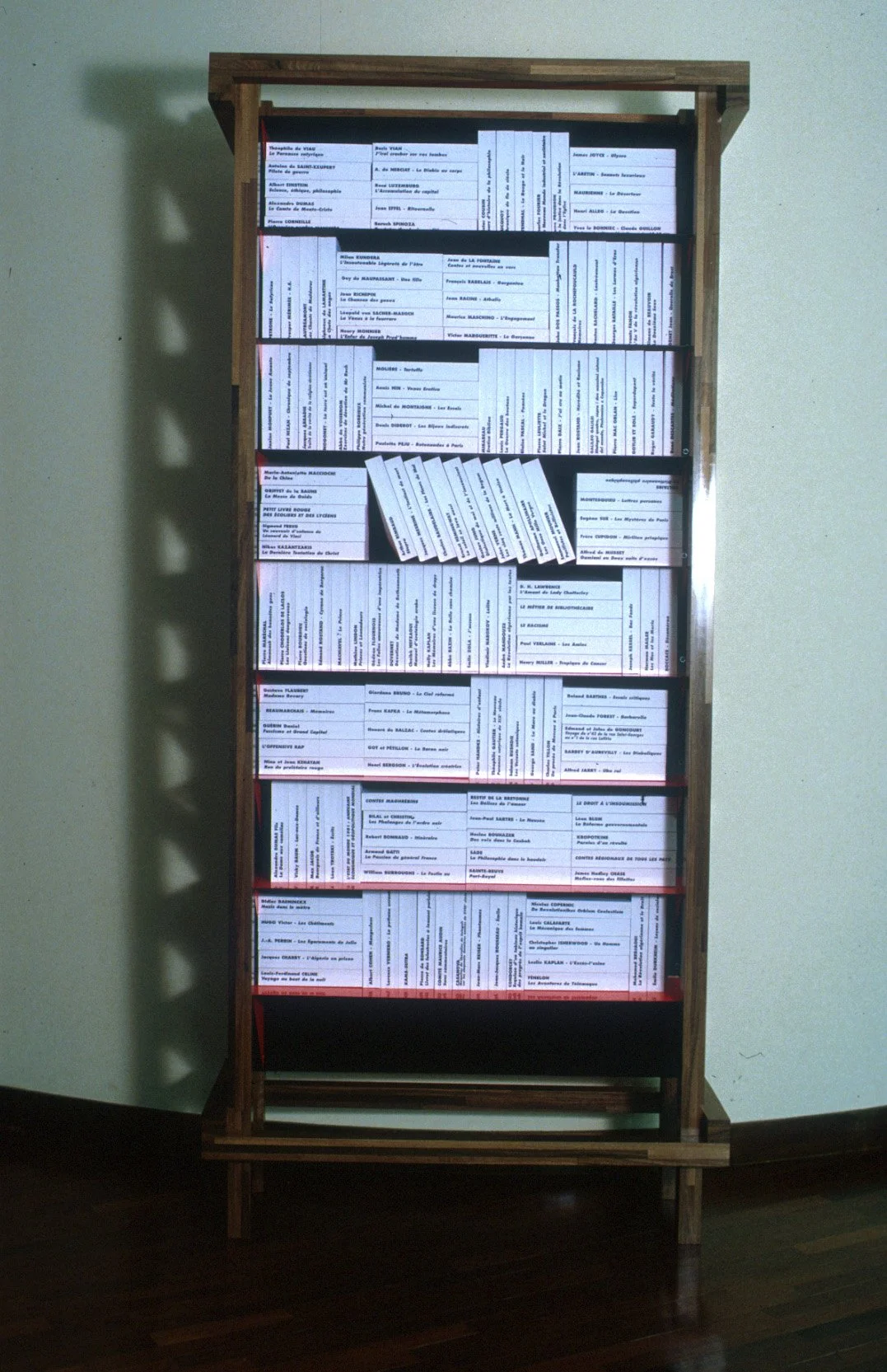
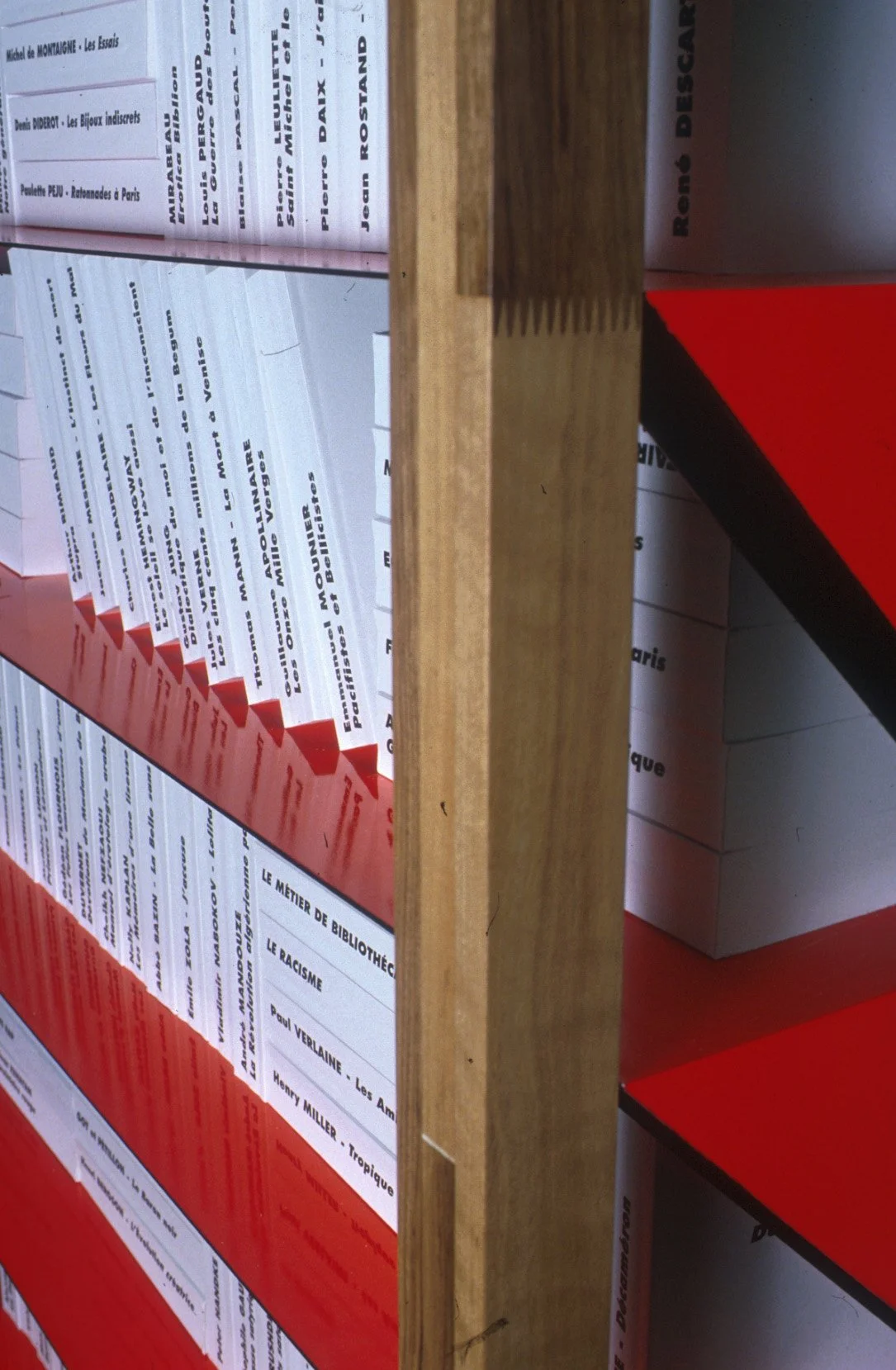
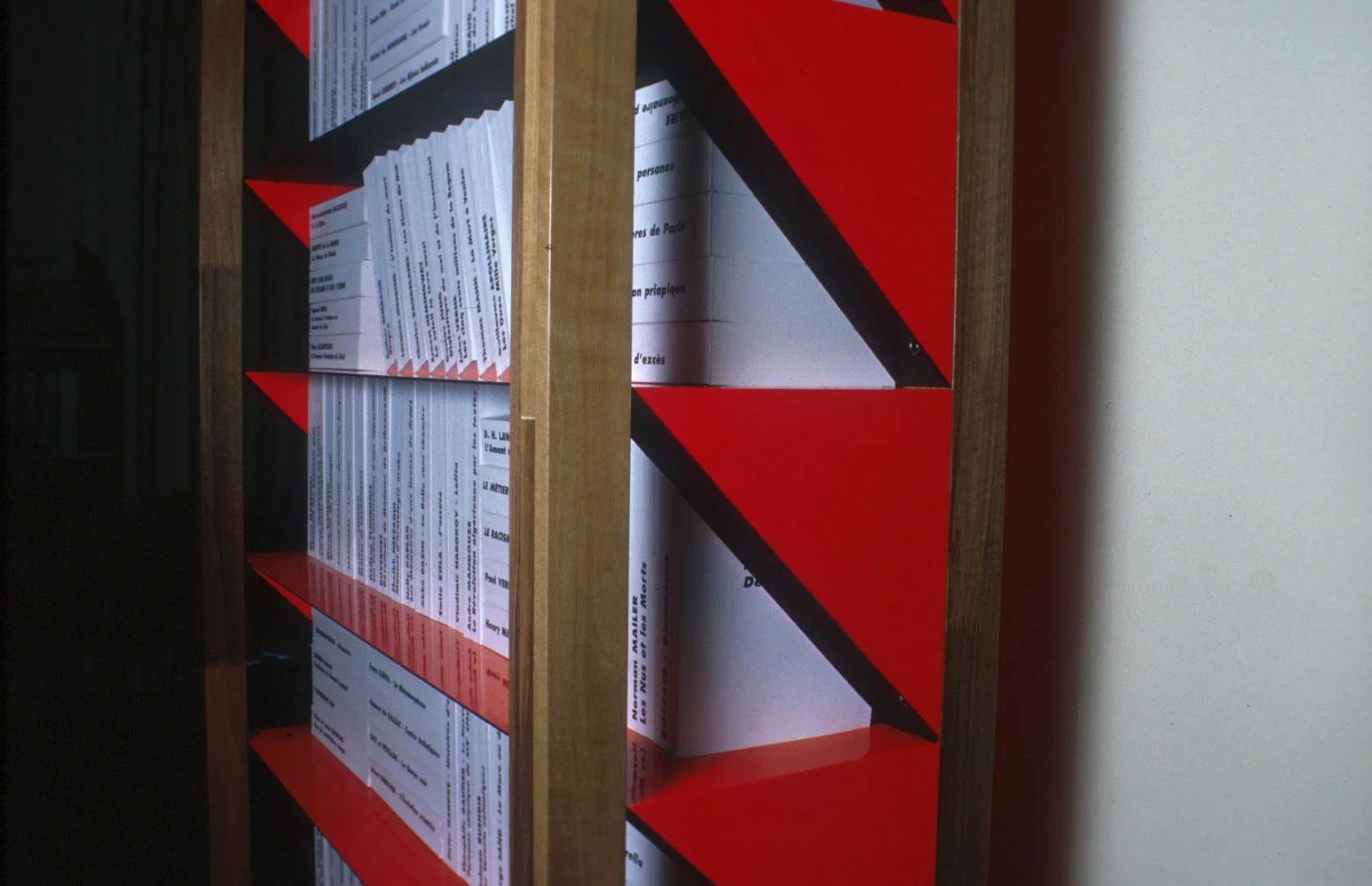
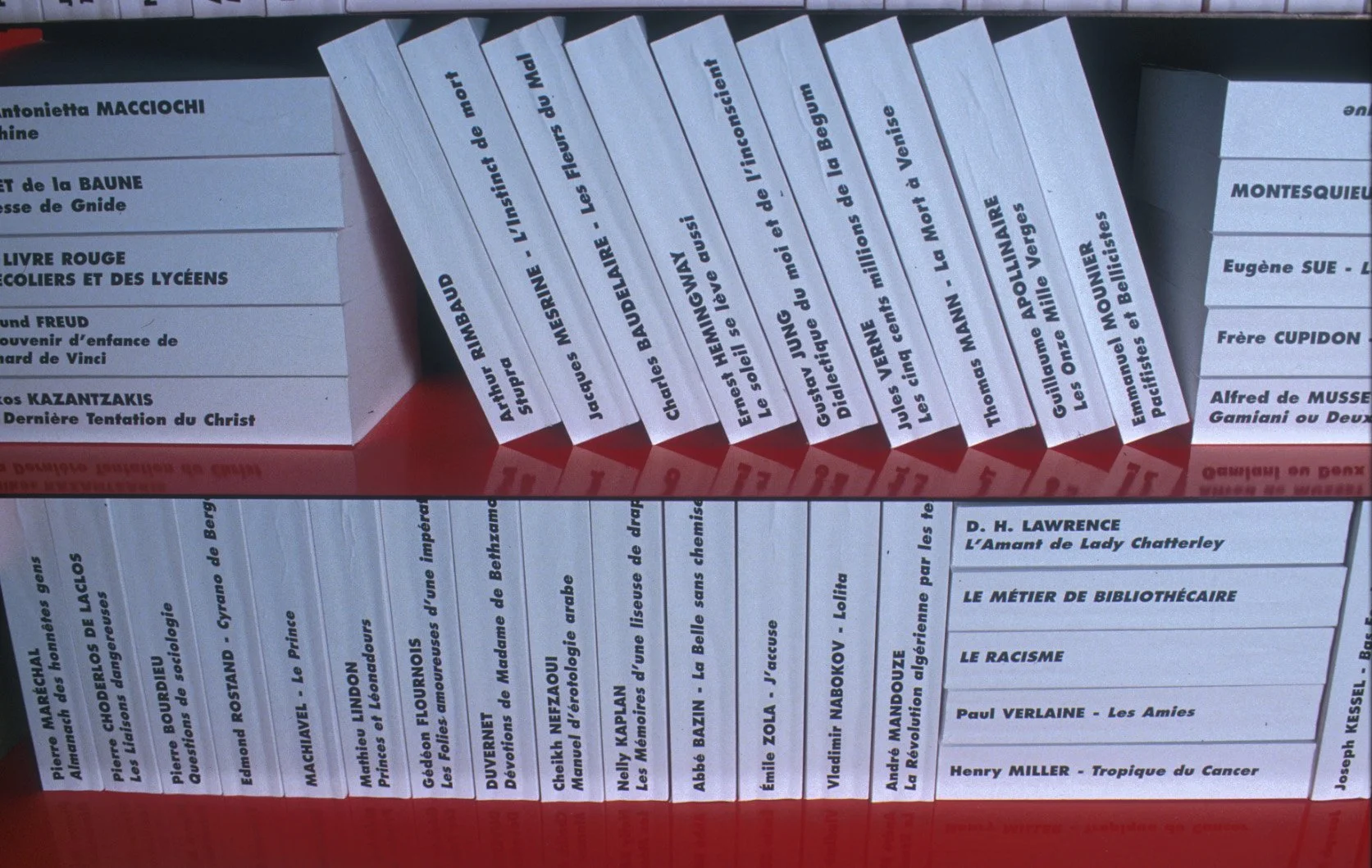
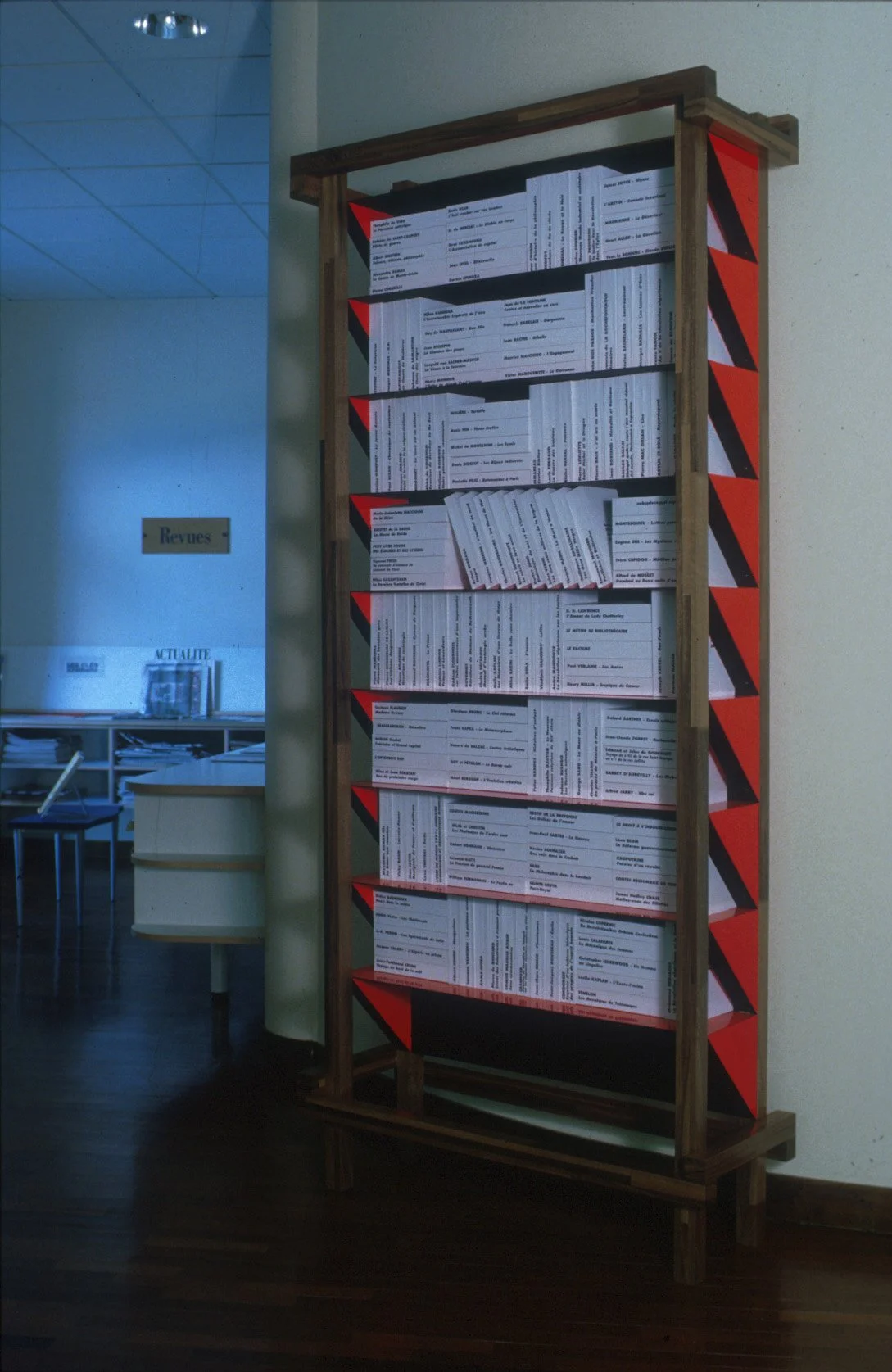
Created in 1998 as part of a public commission for the City of Grenoble, Balise is an installation conceived for the Abbaye-les-Bains media library. It takes the form of a bookcase made of enameled steel and walnut wood containing two hundred books that had, in one way or another, been subjected to censorship.
At first glance, the books appear present, ordered, accessible. Yet apart from their covers, every page has been erased: the volumes have become blank, silent, emptied of their contents. This material disappearance of the text transforms the library into a space of absence and memory.
A booklet made available to the public gathers the complete list of the works, along with the reasons and dates of their prohibition — acts of censorship originating from every political side and from very different historical contexts. At the same time, the Grenoble library network made all of these books accessible throughout its municipal media libraries, extending the installation into a concrete gesture of transmission and resistance against erasure.
Balise emerged within a particular political climate. In May 1998, the growing influence of the Front National within the Rhône-Alpes Regional Council triggered major tensions surrounding cultural policy. Several subsidies allocated to artistic and cultural associations were challenged or withdrawn, provoking what parts of the media described at the time as a “cultural war.”
The work stands as a direct response to those events and to my concerns regarding mechanisms of censorship, ideological normalization, and the control of knowledge. Yet Balise does not merely seek to denounce. It also questions what remains when a text disappears: the memory of works, their underground circulation, and their latent power of resistance.
Walnut and painted metal bookcase, blank books.